
The third part of the trilogy Michael Rakowitz & Ancient Cultures brings contemporary art into dialogue with the iconic monument of classical civilisation, at the renovated Old Acropolis Museum. This is the first contemporary art exhibition to be presented on the Acropolis Hill and marks a major milestone in the longstanding collaboration between NEON and the Ministry of Culture.
The exhibition What You Leave Behind Is Not What Is Engraved, curated by NEON Director Elina Kountouri, is a new commission by NEON to artist Michael Rakowitz. It focuses on stories of diaspora and on how objects from different contexts generate new narratives.
The title of the exhibition paraphrases words attributed to Pericles in the Funeral Oration he delivered for those who died in the first year of the Peloponnesian War: (Τhucydides (2022) The Peloponnesian War: Selections from Book 2). For Rakowitz, Athens is a place of spirals rather than grids, of overlapping histories, encounters and identities it is a place that brings together archaeology, architecture, personal testimony, and the material traces of displacement. The exhibition explores how fragments from different times, regions, and archaeologies combine so that memories survive and new communities are formed. The brick and clay are the central element, a building material associated with the home, which here is transformed into a material for constructing stories and a vessel of memory. From the foundation of a house, it becomes a trace of loss, but also a promise of a new beginning.
Michael Rakowitz began developing his new work in Athens in early 2026, inviting different communities of citizens, refugees and members of the diaspora to participate in workshops and to create imprints of memory.
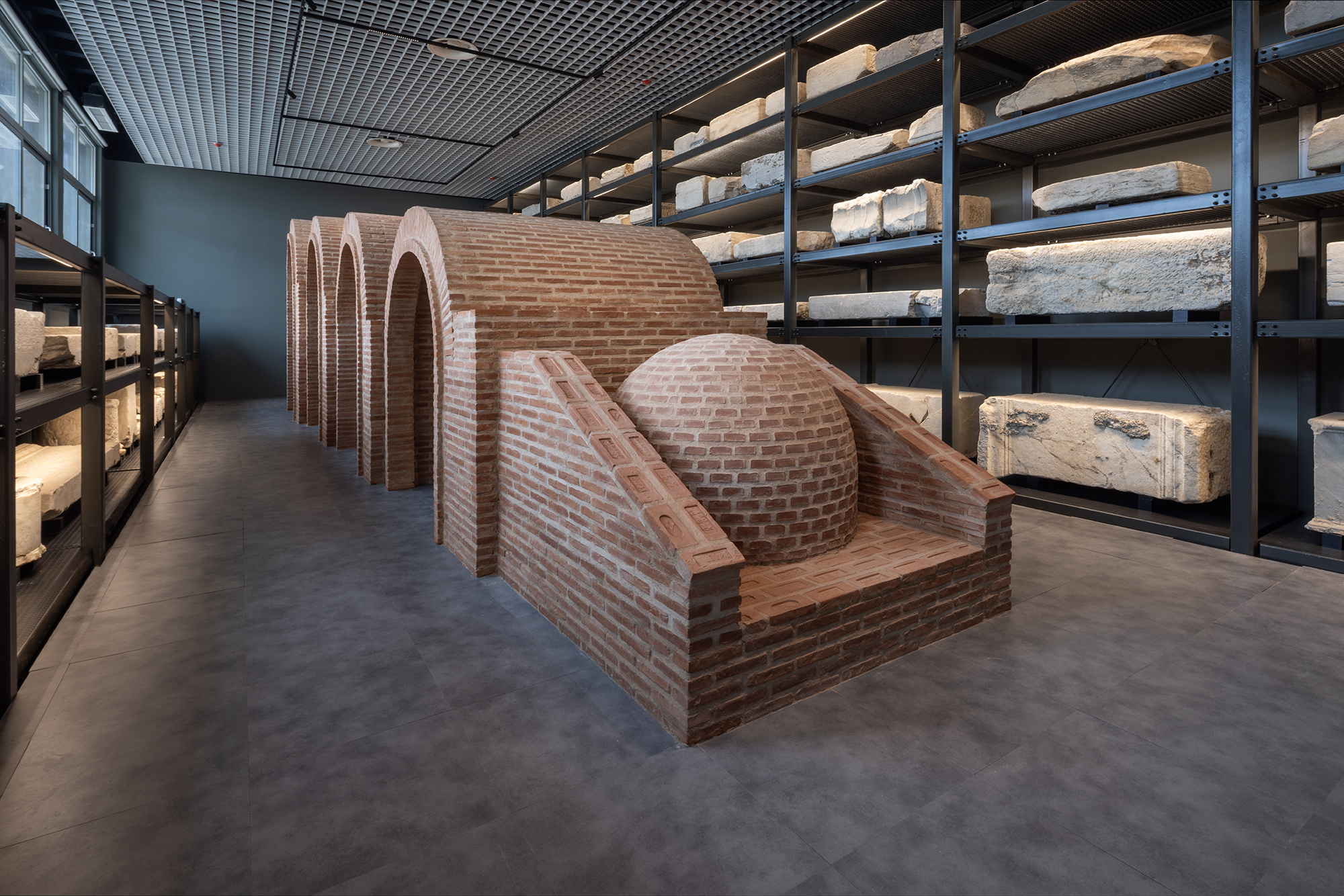
At main exhibition space stands a kiln inspired by a climbing kiln. This large scale sculpture is made with 11,000 bricks stamped with a dozen original imprints of cities and fabricators found on those that were carried back by refugees of the population exchange of the 1900.
As Michael Rakowitz mentions about the characteristic inscriptions “the Asia Minor Greek communities used Greek letters to spell the Ottoman names of their respective cities and towns, and the Ottoman communities in Greece used Ottoman script to spell the Greek names. These transliterations offer insight to the syncretic and pluralistic societies that belonged in these different places, and the bricks themselves contain the clay found beneath the soil in those very places. The brick shifted its meaning from being foundation to debris. From home to diaspora.”
The sculpture’s structure references the kiln -a ceramic furnace- as a “promise that it can be used and to continue to make new bricks to make new homes that testify about those we have left, but for which we continue to long.”